News
Boulez Recital in Kyoto 2025 Mentioned in The Asahi Shimbun, Japan
10 August 2026
THE BELOVED NOTT THEATER TAKES ITS FINAL BOW: LOOKING BACK AT THIS YEAR IN CLASSICAL MUSIC AND DANCE
Japan has seen many distinguished mentors who have nurtured its orchestras, but perhaps no conductor has ever walked alongside musicians and audiences so closely—laughing, crying, and winning their affection—as Jonathan Nott. As music director of the Tokyo Symphony Orchestra, Nott raced through the highlights of the final stretch of his eleven-and-a-half-year tenure.
Unexpected pairings of works. Until the very day of a performance, no one could know what kind of drama would unfold. His inexhaustible ideas and adventurous spirit gave tremendous stimulus to Japan’s orchestral world. The repertoire he chose for his final year—Britten’s War Requiem and Ravel’s L’Enfant et les Sortilèges—seemed almost emblematic of Nott himself: his sincerity, his seriousness of purpose, and his irresistible charm.
The final subscription concert featured Mahler’s Symphony No. 9, the very work he had conducted at his first subscription concert with the orchestra. Back then, the musicians clung to the conductor’s intensity as he challenged them, conducting the score from memory. Now they had reached the ultimate point of harmony and unity. A magnificent circle had been completed. The “Nott Theater” brought us to tears one last time.
It was also a year in which the departures of conductors who understood the meaning of devotion prompted us to look back at the postwar history of Japan’s musical world. Kazuyoshi Akiyama and Yuko Mori, both of whom studied under Hideo Saito alongside the late Seiji Ozawa, cultivated richly individual sounds that reflected their own convictions. Chiaki Murakawa achieved what seemed like a miracle out of a drama: in a single provincial city in Tohoku, he built a first-rate orchestra virtually single-handedly. Yasuhiko Shiozawa expanded the expressive possibilities of wind-band music and nurtured generations of musicians, both professional and amateur. An orchestral job advertisement that called out, “Welcome to a declining industry!” also attracted considerable attention. Yet I want to believe that Japanese orchestras will continue their unparalleled maturation, carrying with them the spirit of those pioneers who demonstrated the power of music to nurture human beings.
Laurent Pelly’s production of A Midsummer Night’s Dream at the Seiji Ozawa Matsumoto Festival taught us that opera can be carried into the future only by drawing upon the imagination of people from the many different artistic fields living in our own time. Ryuichi Sakamoto loved the phrase, “Art is long, life is short,” and perhaps Seiji Ozawa’s own dream for opera will only now begin to truly blossom.
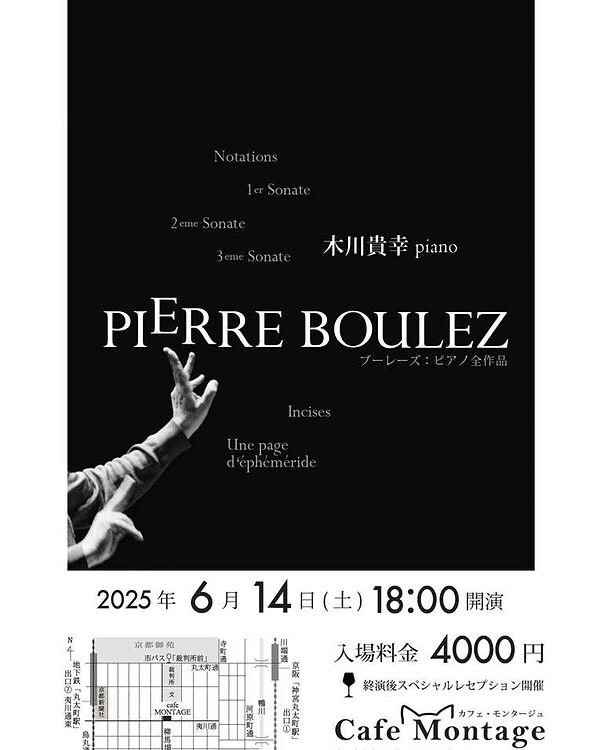
Pianist András Schiff, appearing in Japan for the final time with his own chamber ensemble, Cappella Andrea Barca, offered a vision of peace through music of complete clarity, both in sound and in word. Tomoaki Taniguchi’s collection of piano works by Atsuhiko Gondai, and Taka Kigawa’s ambitious performance at Café Montage in Kyoto of the complete piano works of Pierre Boulez demonstrated that light does more than simply illuminate: it can also deepen and intensify the shadows and contours of human life.
The 98-year-old conductor Herbert Blomstedt once again showed us this year the profound rewards that come with growing older. His childlike curiosity, continually reaching beyond the self, was dazzling. I was also entranced by the pianistic and violinistic dialogues that Mitsuko Uchida and Teiko Maehashi, respectively, each conducted with Beethoven—dialogues of extraordinary purity.
– Junko Yoshida, Asahi Shimbun / 吉田純子・朝日新聞